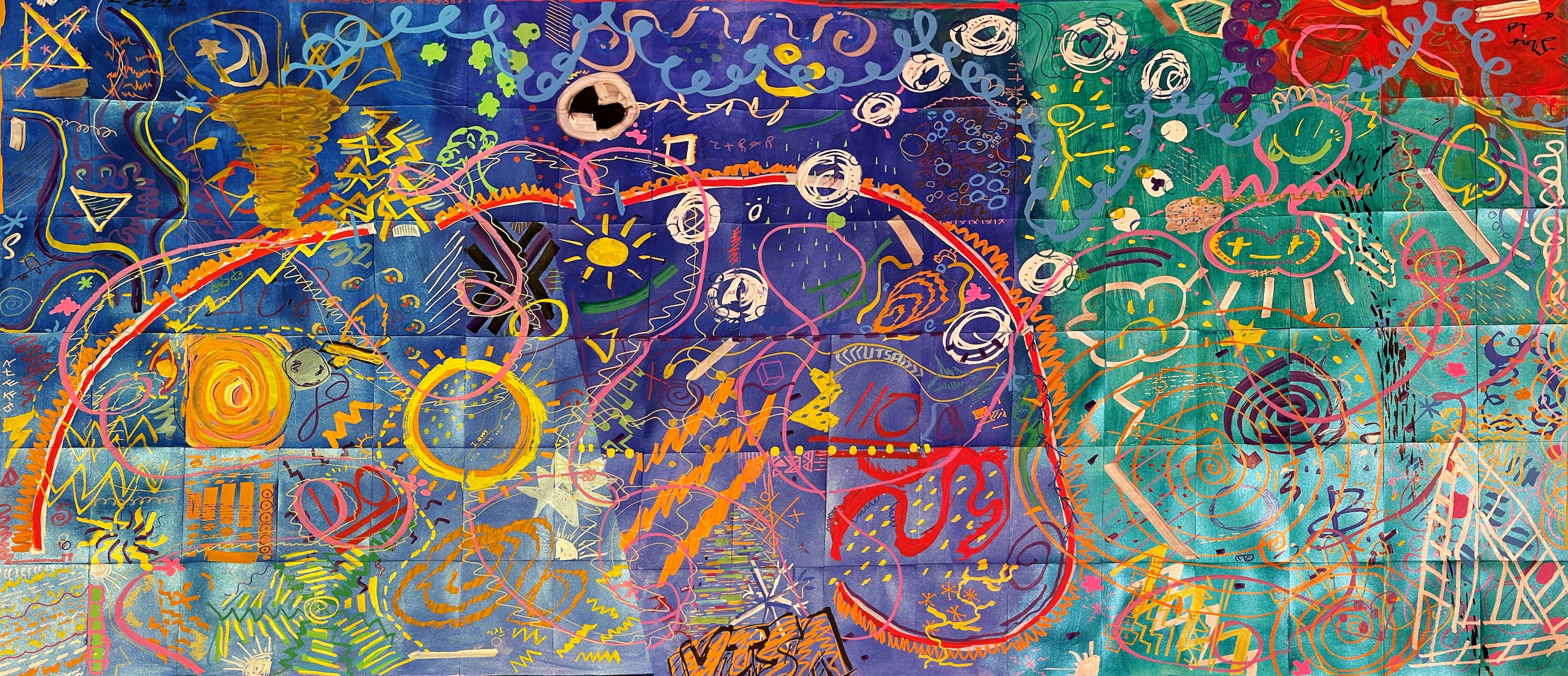
A participatory painting series and a collaborative art ritual where prompts created in collaboration with AI invite people into creative abstraction, shared authorship, and collective meaning-making.
More than an art project, Confluence of Commands is a remix activity that models competencies that we seek to cultivate in both formal and informal educational spaces: it builds creative skillsets and mindsets, lowers the barrier to experimentation, and rehearses the kind of openness we need to imagine better futures together. The story below details how this happens, beginning with the moment that the room shifted from following to leading itself.
I built the first Confluence of Commands with my whole body.
My back and legs and arms ached as I taped and re-taped the pieces of the canvas, measuring and re-measuring, knowing I had to get it right. Because the end of the story wasn’t a single intact painting. The end of the story was separation: taking the canvas apart without damaging anyone’s contribution, honoring each fragment as both individual and part of the whole.
The work required a kind of tunnel vision. At one point I put on headphones and played my favorite poet reading to me. Not for inspiration, exactly, but for focus. The room around me was loud with pre-reception setup: volunteers moving tables, arranging food, testing lights, talking over one another as the space became event-ready. I needed something steady in my ears so my brain could stay with the careful, repetitive labor of building the conditions for other people to arrive and make.
Everything came together in time, and the doors opened for the participants to meander in. I remember teaching a few early arrivals how to begin: how to choose a prompt, how to make one abstract mark without overthinking it, how to treat the canvas like a shared space rather than a personal assignment.
And then I remember walking away.
I found a place to sit, not because I was done, but because I needed to release my grip. I needed to stop managing the outcome long enough to let the room become itself.
When I came back an hour later, the canvas had taken on a new life. Not just more color, more texture, more movement (though it had all of that), but a different kind of life: the life of something no longer dependent on me. Someone I’d guided had become the guide for someone else. A small, practical explanation had turned into a living game of telephone, with visual messages passed from participant to participant with an ease that felt familiar despite this being the inaugural run. The activity was teaching itself.
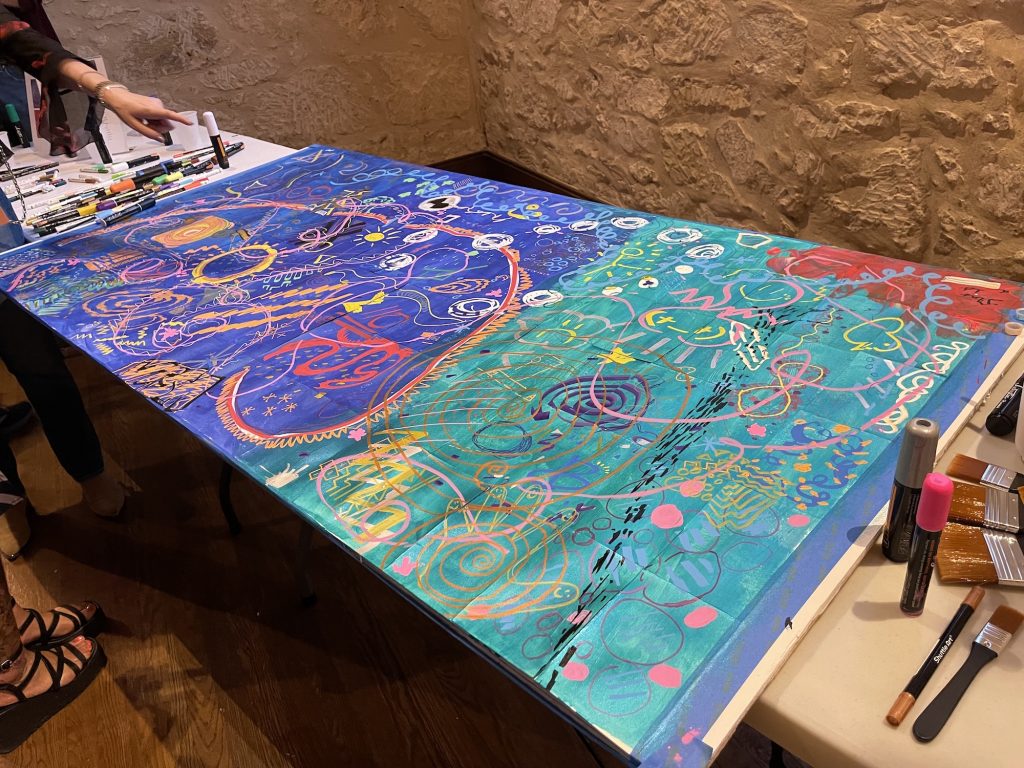
This is one of the surprises Confluence of Commands keeps offering me: even a well-planned idea can greet you with outputs you didn’t anticipate. New patterns, new harmonies, new forms of collaboration you couldn’t have designed in advance. And it can also surface surprising truths about yourself: the parts of you that want control, the parts that can relinquish it, and the parts that feel genuine delight when the work becomes ours.
That moment—seeing the room carry the story without my supervision, and feeling delighted rather than anxious—taught me something I keep returning to: when we design for shared authorship, the most powerful outcomes are often the ones we can’t control.
Anyone Can Be an Educator Here
Confluence of Commands is built on a simple belief that learning is more than an event. It’s a way of moving through the world. It’s what happens when someone notices a newcomer hovering at the edge of the canvas and warmly says, “Want to try?” It’s what happens when a participant models a first mark, small and imperfect on purpose, so the next person feels safe to begin. It’s what happens when people translate the experience for one another in their own language, with their own warmth and humor, and the instructions become less like rules and more like an invitation.
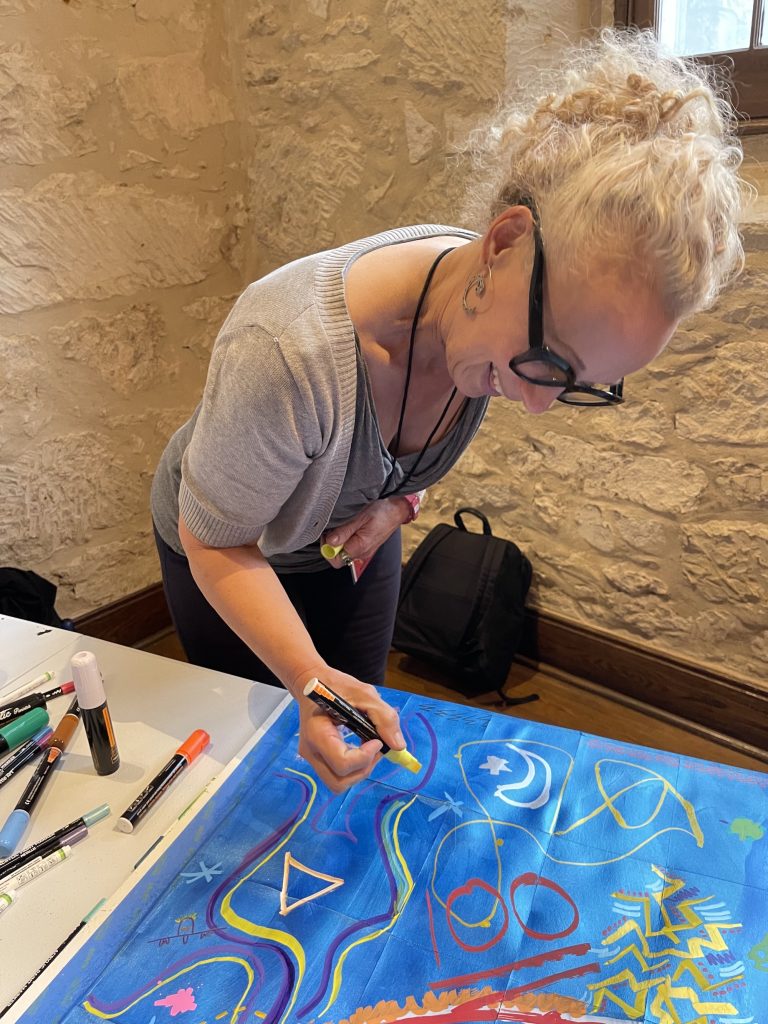
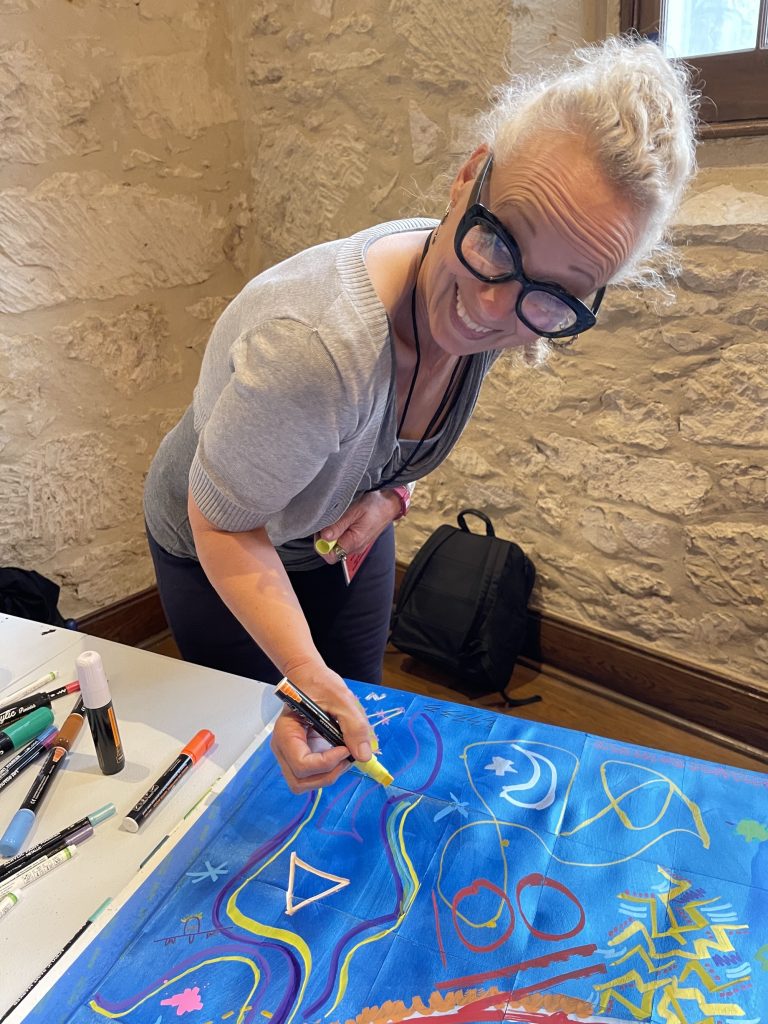
That matters, because one of the quiet barriers many people carry into creative spaces is the belief that creativity belongs to “artists”—to people with training, confidence, or some kind of innate gift. Confluence of Commands is designed to interrupt that story. It doesn’t ask participants to draw a “good” object or to prove skill. It asks for something more human and more accessible: presence, curiosity, and a willingness to make one mark and let it be enough.
You can participate for two minutes or two hours. You can learn by watching before you ever lift a brush. You can enter through play, through reflection, through skepticism, through joy. The work holds all of it.
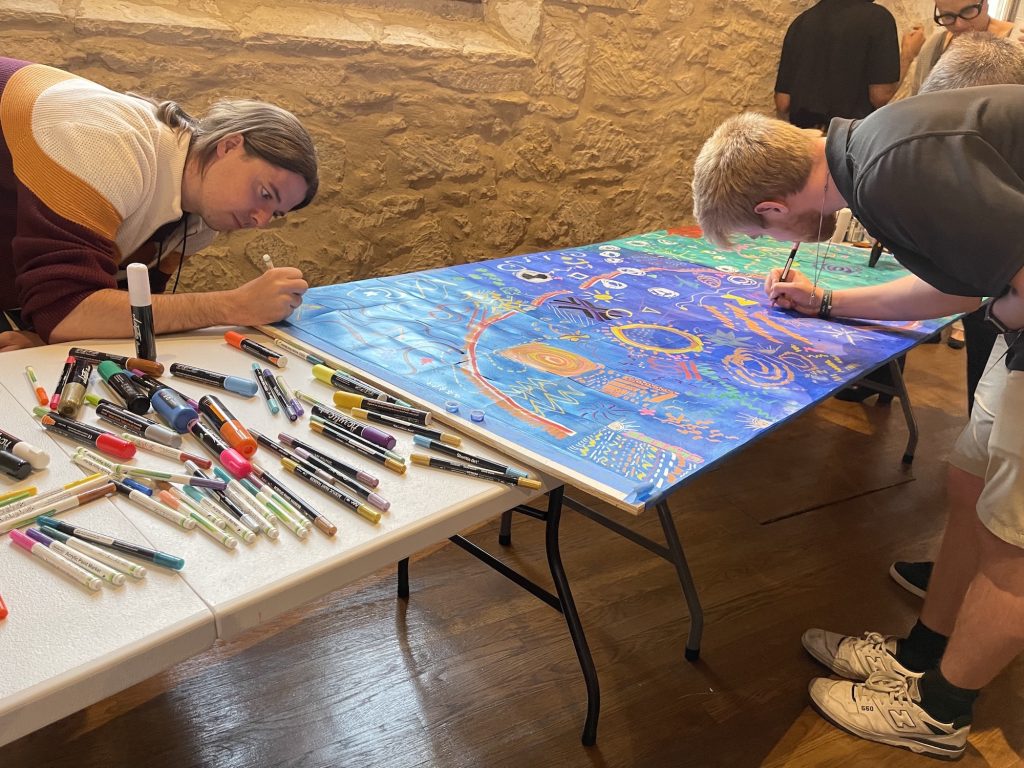
And perhaps most importantly: you don’t have to be the person who “knows” in order to contribute. You can become the person who helps someone else begin. In that sense, the canvas becomes a small rehearsal space for the kind of culture many of us want to build in our learning communities—one where knowledge travels as a gift, and where people feel invited into it rather than evaluated by it.
The Shape of the Experience
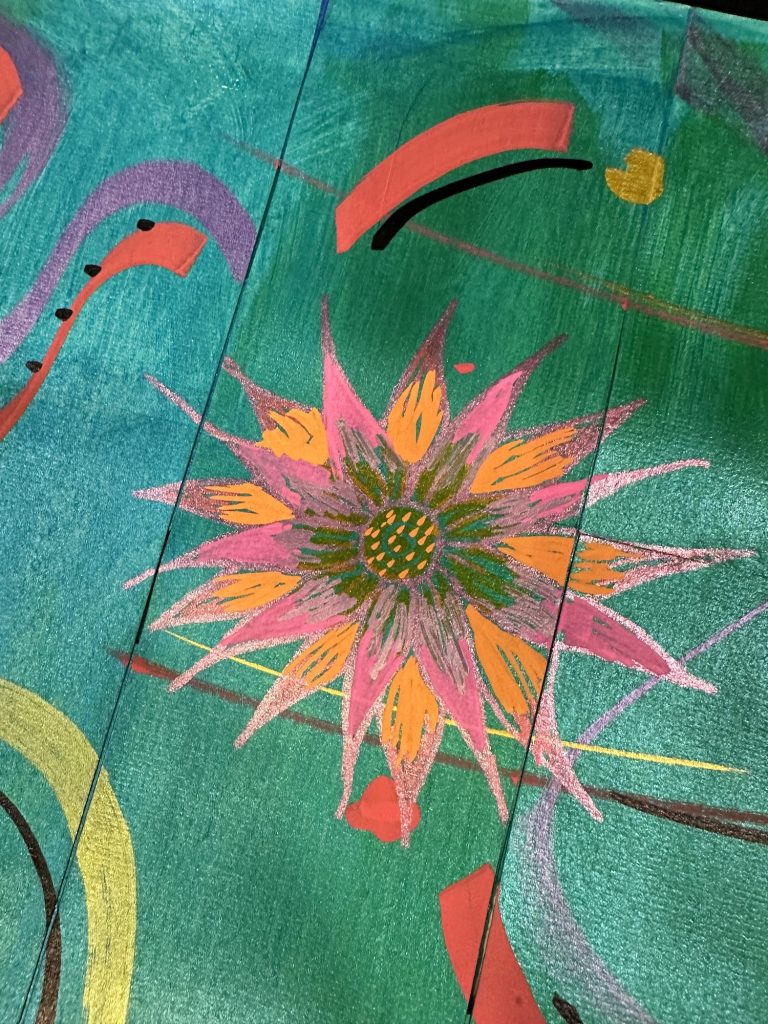
The collaborative painting ritual of Confluence of Commands is built around prompts: short invitations that participants interpret through abstract mark-making on a shared canvas. The prompts are not a script for what to paint; they’re a starting point, a permission slip, a doorway. People respond with line, texture, color, repetition, contrast, and gesture. Over time, individual choices begin to overlap. Patterns emerge. Surprises appear. The canvas becomes a living record of collective imagination.
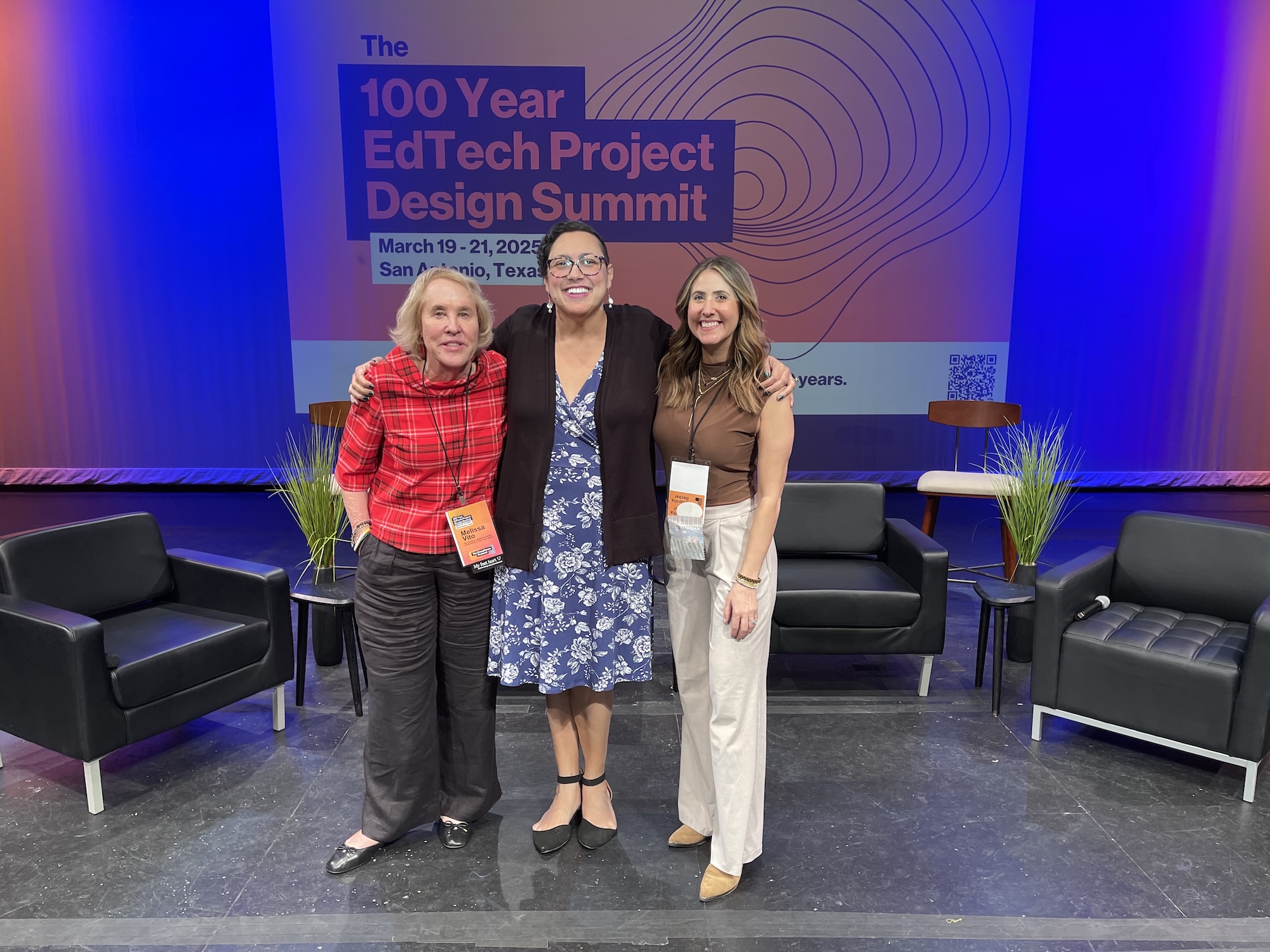
The experience was originally created as a warmup activity within the 100 Year Ed Tech Project. That origin matters, not because Confluence of Commands is “about” educational technology, but because it was designed as a form of readiness for futures work. Before we can imagine what learning might become, we have to practice a different relationship to uncertainty: the kind that allows us to begin without guarantees, to build with others, and to treat emergence as a feature rather than a flaw.
There is also an artistic lineage underneath this structure. Instruction-based and participatory conceptual artworks have long asked variations of the same question: if an idea is proposed by one person but carried out by many, where does the art actually live—in the maker, in the director, in the instruction, in the community that interprets it? Confluence of Commands lives in that lineage, but it remixes it in a very particular way: it treats the room as a co-author, and it treats interpretation—not execution—as the creative center.
Remix Is Dialogue
In all of my scholarly research and practice, one of the most important things I’ve learned about remix is that it isn’t simply reuse. It’s a conversation.
Every act of creation is already in dialogue with something else: the work that shaped us, the voices we’ve absorbed, the teachers and artists and communities whose ideas live in our bodies, the cultural materials we carry, often without realizing it. We do not make in isolation. We make with others, with the past, and with the possibilities we can’t yet see.
That’s why Confluence of Commands often includes an invited interlocutor, an artist whose questions can sit with us as we paint. When I brought Mildred Thompson into the first several iterations of this activity, I wasn’t asking participants to imitate her aesthetic. I was inviting her conversation, her way of holding art and science together, into the room. The canvas became a dialogue not only among participants, but also with her work, her inquiry, and the larger set of questions she was already asking through paint.
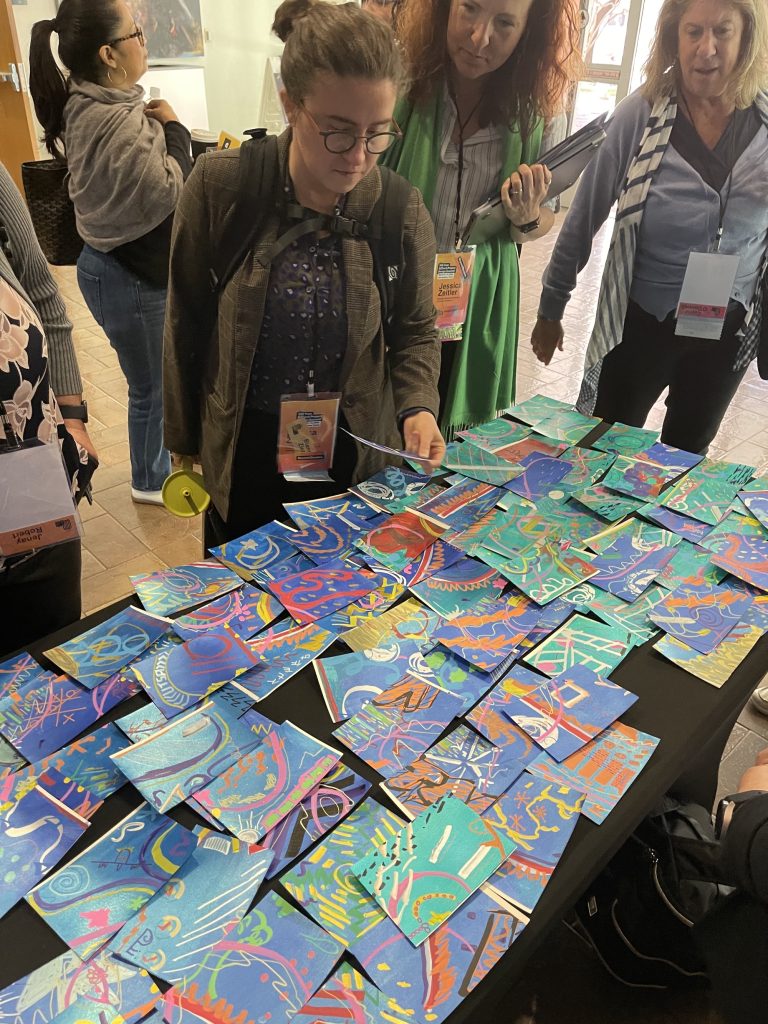
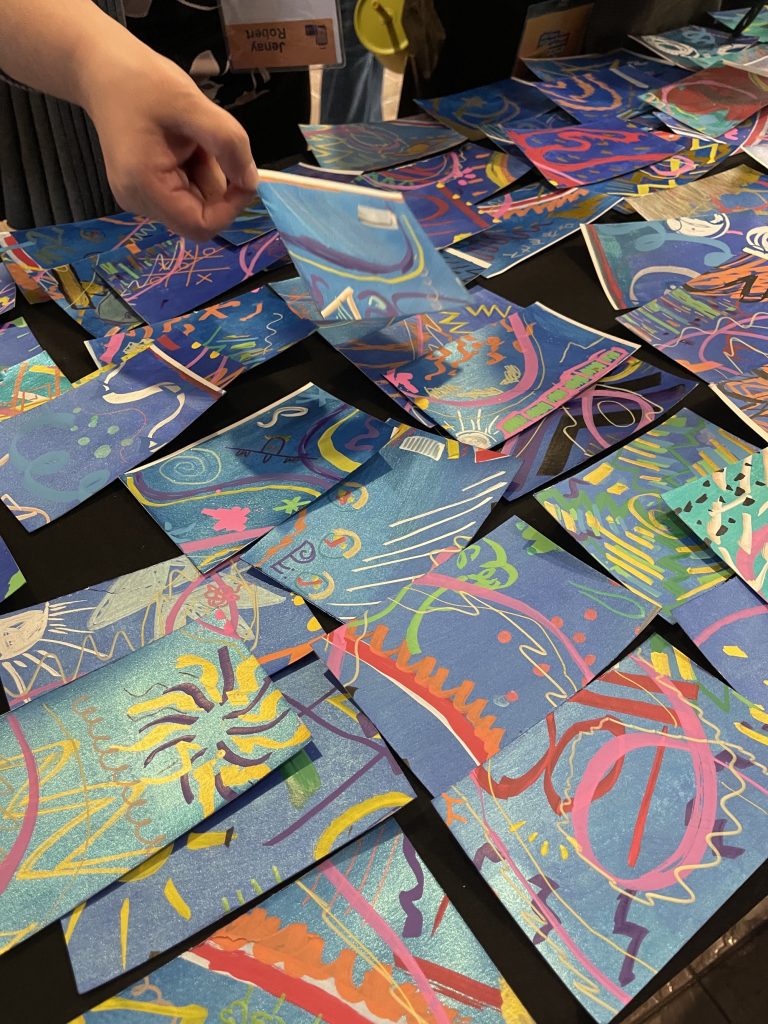
In this sense, the “commands” are never the point. The confluence is.
The canvas becomes a meeting place: between strangers who are suddenly co-authors; between disciplines that rarely share a single surface; between private imagination and public making; between what came before and what will be remixed forward. And because the work is shared, it also becomes generative. The artifact doesn’t end at the edge of the canvas. It seeds future outputs—new conversations, new designs, new forms of teaching, new experiments with openness. The painting is one result. The ripple is another.
The Modern Ghost in the Room: AI in the Loop
There is a modern presence threaded through Confluence of Commands that many people feel immediately, even if they can’t name it at first: AI. In this series, AI is not the artist. It does not replace human imagination or human meaning-making. Instead, it functions as a particular kind of participant, an engine for proposing language, reframing attention, and offering prompts that humans then interpret through their own bodies, histories, and relationships with one another.
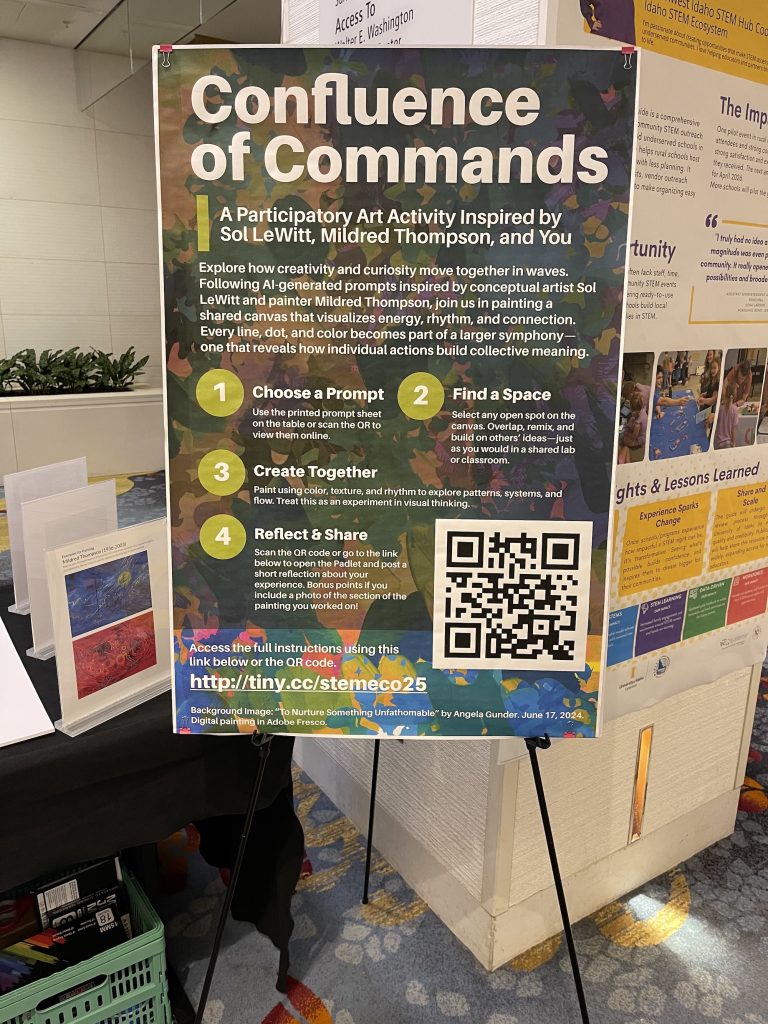
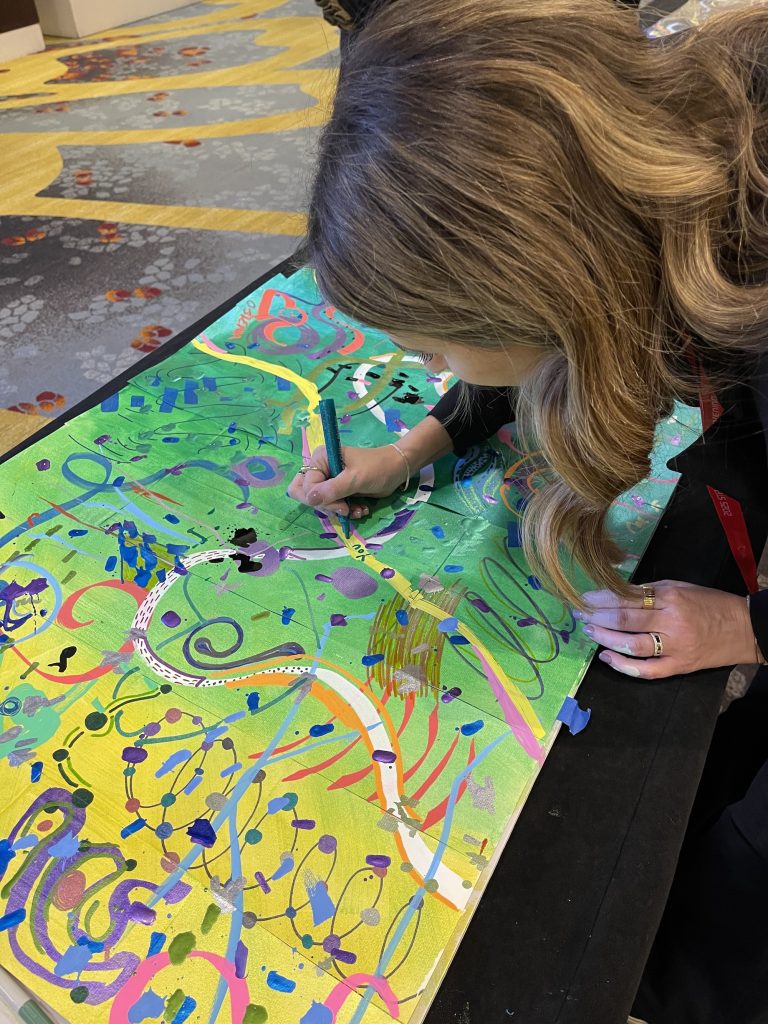
That matters, because AI has a way of haunting contemporary conversations about creativity. Some people approach it with excitement. Others approach it with grief, anger, fear, or deep skepticism. Many carry a mixture of all of the above. Confluence of Commands doesn’t try to settle that debate in a single gesture. It creates a container where the relationship can be explored more honestly: where AI can be present without becoming central, and where human creativity is understood not as individual genius, but as collaborative sensemaking, shaped by culture, care, and context.In other words, AI becomes one more “ghost in the room”—not unlike the voices of prior artists, teachers, and traditions that always accompany us when we create. The difference is that this ghost speaks back in real time. The question Confluence of Commands keeps asking is not “Can AI make art?” but something more useful: What does it mean to remain human-centered in our creative practices when new participants enter the room? What kinds of culture do we want to build around our tools—and what kinds of culture do we refuse?
Take It Further
If you’ve found your way here, there’s a good chance you’re carrying your own questions about creativity, learning, technology, and what it means to make in community. I always want to hear from people who are navigating those questions—especially when you’re building something new, or trying to make an old system more alive.
If you want to go deeper into the structure and facilitation choices behind this series, you can read The Making of Confluence of Commands.
And if Confluence of Commands is sparking ideas for your own community, whether as a facilitated experience, a remixable ritual, or a prompt for your own design work, I’d love to hear what you’re imagining. You can reach me using the contact form on my personal website.
And if you want to learn more about my work in education and creativity, visit my personal website the website of my collaboratory, Opened Culture.
_____
Image at Top: “Confluence of Commands (I)” March 19, 2025.